
Wheat (Triticum aestivum)
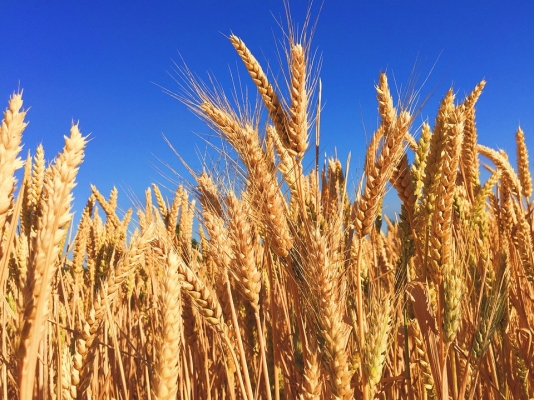
Wheat is grown on 13 percent of the cropped area of India. Next to rice, wheat is the most important food-grain of India and is the staple food of millions of Indians, particularly in the northern and north-western parts of the country.
It is rich in proteins, vitamins and carbohydrates and provides balanced food. India is the fourth largest producer of wheat in the world after Russia, the USA and China and accounts for 8.7% of the world’s total production of wheat. Haryana contributes 13.3% towards national production of wheat from the 8.9% of wheat growing area of the country, with an average productivity of nearly 4 tonnes/ha. The area, production and productivity, averaged over last five years are 2.3 million ha, 9.3 tonnes and 4 tonnes/ha respectively. The trend during last five years has shown marginal decline in production and productivity from nearly stable area of cultivation. Wheat production in the state is constant due to reduced soil organic carbon status, nutrient mining, imbalanced fertilization, crop residue burning leading to nutrient and organic carbon loss and declining water table. The major constraints are: threat of Karnal bunt and yellow rust diseases. Cost effective crop production and the suggested technological interventions are:
- Improved varieties
Irrigated timely sown: DBW 17, PBW 502, PBW 343, WH 542, PDW291(Durum),PDW 251 (Durum), WH 896 (Durum), PDW 233 (Durum)Irrigated late sown: DBW 16, PBW 373, RAJ 3765, UP 2425, PBW 226Rainfed timely sown: PBW 396, PBW 299, WH 533
- Growing of modern high-yielding, new race of yellow rust-resistant variety, DBW 17 and PBW 502 with tolerance to Karnal bunt
- Green manuring with Sesbania between wheat/rice
- Balanced, recommended fertilizer application
- Adoption of resource conservation technologies such as zero tillage, FIRB and laser land levelling
- For diversification of rice-wheat, rice can be substituted by short duration pigeonpea (AL 201, Manak and Pusa 992) maturing in 130 days
- Intensification of rice-wheat system by including vegetable peas (VRP 5, VRP 6 and VRP 22) after rice and mungbean (SML 668, Pusa Vishal and Samrat)/cowpea (CP 3 and CP 4)
Hi. I’m Designer of Blog Magic. I’m CEO/Founder of ThemeXpose. I’m Creative Art Director, Web Designer, UI/UX Designer, Interaction Designer, Industrial Designer, Web Developer, Business Enthusiast, StartUp Enthusiast, Speaker, Writer and Photographer. Inspired to make things looks better.


0 comments:
Post a Comment